
As the demand for rooftop and ground-mounted solar installations continues to rise, understanding the solar mounting structure price has become an important part of planning a successful solar project. While many buyers focus on the cost of solar panels and inverters, the mounting structure is the foundation that supports the entire system for decades. Its quality engineering and durability have a direct impact on safety performance and long-term return on investment.
The price of a solar mounting structure is influenced by much more than the amount of steel used. Material quality, structural design, manufacturing processes, corrosion protection, installation requirements and warranty coverage all contribute to the final cost. Choosing the lowest-priced option may reduce the initial investment but it can also lead to higher maintenance expenses, reduced lifespan and costly repairs in the future.
This guide explains the major factors that determine mounting structure pricing in 2026 and why investing in quality engineering delivers better long-term value for commercial and industrial solar projects.
Why the Mounting Structure Is a Long-Term Investment
A solar mounting structure is designed to support solar panels throughout their operating life, which typically exceeds 25 years. During this period, the structure must withstand wind, rain, temperature changes, corrosion and continuous structural loading without losing stability.
A high-quality mounting structure offers several advantages.
- Reliable structural support
- Improved system safety
- Better panel alignment
- Reduced maintenance requirements
- Longer service life
- Consistent energy generation
Although the mounting structure represents only a portion of the total solar project cost, its quality influences the performance of every other system component.
Manufacturers such as Nuvo Steelcraft focus on precision engineering and durable manufacturing practices to deliver structures built for long-term reliability.
What Determines Solar Mounting Structure Price?
The cost of a mounting structure varies from one project to another because every installation has unique engineering requirements.
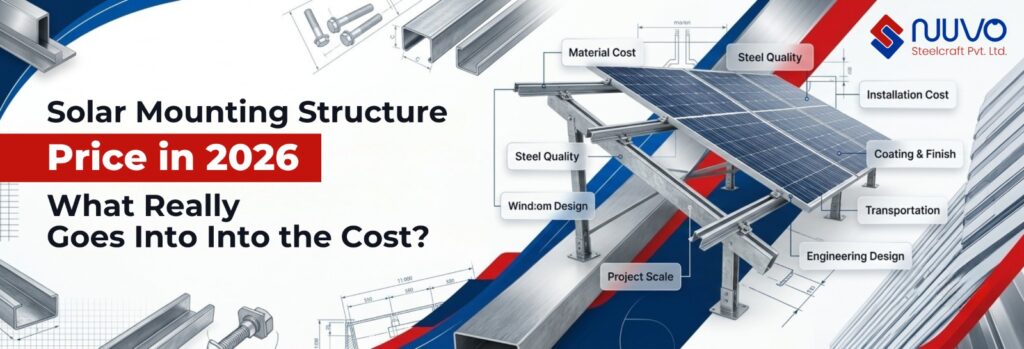
The most important pricing factors include:
- Project size
- Structural design
- Material selection
- Corrosion protection
- Wind load requirements
- Roof or ground conditions
- Manufacturing quality
- Installation complexity
- Warranty coverage
Understanding these variables helps buyers compare products based on value rather than price alone.
MMS Cost Per kW
One of the most common methods used for estimating structural pricing is MMS cost per kW.
Rather than calculating cost only by weight or steel quantity, many commercial projects estimate mounting structure expenses according to installed solar capacity.
Several factors influence cost per kilowatt.
Project Capacity
Large utility-scale projects usually benefit from economies of scale because manufacturing, transportation and installation become more efficient.
Smaller commercial projects may have a slightly higher cost per kilowatt due to fixed engineering and fabrication expenses.
Rooftop or Ground Installation
Ground-mounted systems often require:
- Foundation work
- Site preparation
- Additional structural members
- Longer installation time
Rooftop systems may reduce civil construction costs but require detailed structural assessments before installation.
Roof Configuration
Complex roof layouts with varying heights, equipment or limited access may require customized mounting systems, which increase fabrication complexity.
Panel Layout
Panel orientation, spacing and tilt angle affect the quantity of structural members required.
Efficient layouts often reduce material consumption without compromising safety.
Why Material Quality Matters
Material selection has one of the greatest influences on mounting structure performance and pricing.
High-quality materials improve structural strength, corrosion resistance and service life.
Poor-quality steel may reduce initial cost but significantly increase maintenance expenses over time.
Galvanised Steel Structure
A galvanised steel structure remains the preferred choice for commercial and industrial solar projects because it combines strength, durability and cost efficiency.
Its benefits include:
- High load-bearing capacity
- Excellent structural rigidity
- Long operational life
- Resistance to corrosion
- Low maintenance requirements
Galvanised steel performs especially well in demanding industrial environments where structures experience continuous exposure to changing weather conditions.
For large commercial installations, this material provides an ideal balance between performance and overall project cost.
Steel Thickness and Structural Design
The thickness of structural members directly influences both strength and pricing.
Engineers determine steel dimensions based on:
- Wind loads
- Snow loads where applicable
- Panel weight
- Roof characteristics
- Span length
- Local building regulations
Using excessive steel unnecessarily increases cost, while insufficient steel compromises structural safety.
Professional engineering ensures the right balance between economy and performance.
The Importance of Hot-Dip Galvanisation
One of the biggest contributors to long-term durability is hot-dip galvanisation.
This protective process coats steel with a thick layer of zinc that shields it against corrosion for many years.
Compared to ordinary painted steel, hot-dip galvanised components provide significantly better environmental protection.
Benefits of Hot-Dip Galvanisation
Superior Corrosion Resistance
The zinc coating protects steel from moisture, chemicals and atmospheric corrosion.
Longer Service Life
Proper galvanisation helps structures remain durable throughout the lifespan of the solar installation.
Lower Maintenance Costs
Reduced corrosion means fewer repairs, replacements and maintenance visits.
Better Performance in Harsh Environments
Industrial coastal and high-humidity locations benefit greatly from high-quality galvanised structures.
Although hot-dip galvanisation increases manufacturing costs, it often lowers total ownership costs over the life of the project.
Companies like Nuvo Steelcraft prioritize quality corrosion protection because it directly influences structural reliability and customer value.
Engineering and Design Costs
Every solar project requires detailed engineering before manufacturing begins.
Design activities typically include:
- Structural calculations
- Wind load analysis
- Connection design
- Material optimization
- Foundation assessment
- Roof evaluation
- Fabrication drawings
Customized engineering ensures every mounting system meets project-specific performance requirements.
Standardized designs may appear less expensive initially but customized engineering often improves efficiency while reducing long-term operational risks.
Manufacturing Quality and Precision
Manufacturing accuracy directly affects installation speed, structural performance and long-term durability.
Precision fabrication provides several benefits.
- Accurate hole positioning
- Better component alignment
- Faster assembly
- Reduced installation errors
- Improved structural stability
Advanced manufacturing equipment produces consistent components that simplify installation and reduce project delays.
Installation Complexity
Installation requirements also influence overall mounting structure pricing.
Projects become more expensive when they involve:
- Difficult rooftop access
- High-rise buildings
- Complex roof geometry
- Remote project locations
- Challenging soil conditions
- Specialized lifting equipment
Careful project planning helps optimize installation costs without compromising structural quality.
Wind Load Requirements
Every solar structure must safely withstand environmental loads throughout its lifespan.
Higher wind zones generally require:
- Additional structural reinforcement
- Stronger foundations
- Larger support members
- Improved connection systems
Although stronger designs increase initial costs, they significantly improve long-term safety and reliability.
Structure Warranty
An often overlooked factor influencing purchasing decisions is the structure warranty.
Warranty coverage reflects the manufacturer’s confidence in product quality and engineering standards.
A reliable warranty offers assurance that the mounting system has been designed and manufactured for long-term performance.
What a Good Structure Warranty Indicates
A comprehensive warranty generally reflects:
- High-quality materials
- Controlled manufacturing processes
- Reliable corrosion protection
- Engineering compliance
- Long-term durability
When comparing suppliers, buyers should evaluate warranty terms alongside technical specifications rather than focusing only on purchase price.
Manufacturers such as Nuvo Steelcraft emphasize quality manufacturing practices that support dependable structural performance throughout the expected lifespan of commercial solar projects.
Common Pricing Mistakes Buyers Make
Many purchasing decisions focus only on upfront costs.
This approach often overlooks several important long-term considerations.
Choosing the Lowest Price
Lower-priced structures may use thinner steel, lower-quality coatings or simplified engineering.
These savings often result in higher maintenance expenses later.
Ignoring Corrosion Protection
Poor surface protection accelerates corrosion, especially in industrial and coastal environments.
Replacing damaged structures can become significantly more expensive than investing in quality materials from the beginning.
Comparing Only Steel Weight
The total amount of steel does not determine structural quality.
Engineering efficiency, manufacturing precision and material grade all influence overall performance.
Overlooking Engineering Support
Technical assistance during design, manufacturing and installation often prevents costly project delays.
How to Evaluate Overall Value
Instead of asking only about price, buyers should evaluate the complete lifecycle value of the mounting structure.
Important questions include:
- Is the structure engineered specifically for the project?
- Does it comply with recognized engineering standards?
- What type of galvanisation process is used?
- Is wind load analysis included?
- What warranty is provided?
- Can the manufacturer support future project expansion?
- Is technical documentation available?
These questions help identify suppliers that prioritize long-term quality rather than short-term pricing.
Why Quality Delivers Better Return on Investment
A properly engineered mounting structure contributes to higher overall project performance.
Long-term benefits include:
- Improved structural safety
- Lower maintenance expenses
- Reduced downtime
- Better energy generation consistency
- Longer system lifespan
- Higher asset value
Investing in quality engineering often produces greater financial returns over the operational life of the solar system.
Choosing the Right Manufacturing Partner
Selecting an experienced structural manufacturer is just as important as selecting the solar panels themselves.
A reliable manufacturing partner should provide:
- Engineering expertise
- Precision fabrication
- Quality-tested materials
- Strong corrosion protection
- Reliable technical support
- Consistent manufacturing standards
With extensive experience in engineered steel solutions, Nuvo Steelcraft delivers solar mounting structures designed for commercial and industrial applications where durability, precision and long-term performance are essential. By combining advanced manufacturing with robust engineering, Nuvo Steelcraft helps businesses build dependable solar infrastructure that stands the test of time.
Conclusion
Understanding the solar mounting structure price involves much more than comparing quotations. Factors such as MMS cost per kW, material quality, engineering complexity, installation requirements, corrosion protection and structure warranty all influence the total investment and long-term value of a solar project.
Choosing a durable galvanised steel structure with high-quality hot-dip galvanisation may involve a higher initial cost but it significantly improves structural reliability, reduces maintenance and extends the service life of the entire solar installation.
For commercial and industrial projects, partnering with an experienced manufacturer makes a meaningful difference. Nuvo Steelcraft combines engineering expertise, precision manufacturing and quality materials to deliver solar mounting structures that provide dependable performance for decades. Investing in the right structure today helps ensure a safer, more efficient and more profitable solar system well into the future.