
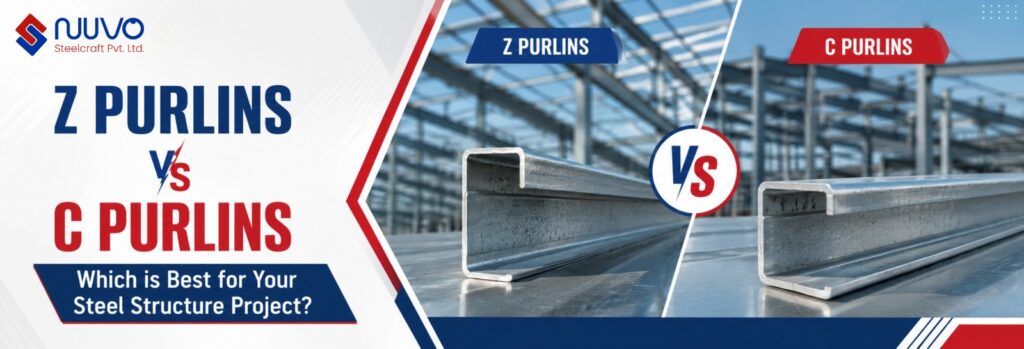
The success of any steel building depends not only on its primary structural framework but also on the secondary components that support the overall structure. While beams, columns and trusses often receive the most attention during project planning, Z and C purlins play an equally important role in ensuring stability, strength and long-term performance.
In modern steel construction, purlins serve as essential structural members that support roofing and wall cladding systems. They help transfer loads from the roof to the primary framework while maintaining structural integrity and alignment. Whether constructing warehouses, factories, industrial sheds, logistics centres, agricultural buildings or commercial structures, selecting the right purlin system is a critical engineering decision.
Among the various options available, Z purlins and C purlins are the most widely used. Both offer distinct advantages and are commonly utilised across pre-engineered buildings and steel construction projects. However, many project owners, contractors and engineers often struggle to determine which option is better suited for their specific requirements.
Understanding the differences between Z and C purlins can help optimize structural performance, reduce material costs, improve installation efficiency and enhance the overall durability of a project.
In this blog, we will explore the characteristics, applications, advantages and limitations of both systems to help you make an informed decision for your next steel structure project.
Understanding the Role of Purlins in Steel Structures
Before comparing Z and C purlins, it is important to understand their function within a building system.
Purlins are horizontal structural members installed between the primary structural framework and roofing or wall cladding. Their primary purpose is to support roof sheets and transfer loads to the main structure.
These loads may include:
- Dead loads
- Live loads
- Wind loads
- Snow loads (where applicable)
- Maintenance loads
- Environmental forces
Purlins are among the most important steel structure components because they contribute directly to roof stability, load distribution and overall structural performance.
Without properly designed purlins, roofing systems may experience excessive deflection, instability or structural failure.
Why Purlins Matter in Modern Construction
Modern steel buildings are expected to be strong, lightweight, cost-effective and adaptable.
The choice of purlin system affects:
- Structural efficiency
- Material consumption
- Construction speed
- Maintenance requirements
- Expansion flexibility
- Overall project cost
As industries increasingly adopt pre-engineered construction methods, demand for high-performance PEB accessories such as purlins continues to grow.
Selecting the appropriate purlin profile ensures that the roofing system performs efficiently while supporting long-term durability objectives.
What Are C Purlins?
C purlins steel sections are named after their distinctive “C” shaped profile. These members feature a simple, symmetrical cross-section that provides strength and versatility across various construction applications.
C purlins are commonly manufactured using cold-formed steel and are available in different sizes, thicknesses and configurations to accommodate varying structural requirements.
Due to their straightforward design, C purlins are frequently used in:
- Wall systems
- Roof support systems
- Mezzanine floors
- Industrial sheds
- Small to medium-span structures
- Secondary framing applications
Their simplicity and ease of installation have made them a popular choice in steel construction projects throughout India.
Advantages of C Purlins Steel
One of the primary advantages of C purlins steel is versatility.
Because of their symmetrical shape, C purlins can be installed easily in a variety of configurations. They are particularly effective in structures where simple framing arrangements are required.
Additional advantages include:
- Easy fabrication
- Simple installation
- Wide availability
- Cost-effective production
- Strong structural performance for shorter spans
- Compatibility with various roofing systems
These benefits make C purlins a practical solution for many commercial and industrial projects.
Their straightforward geometry also simplifies detailing and construction processes.
Limitations of C Purlins
While C purlins offer numerous advantages, they also have certain limitations.
One of the main challenges is their reduced efficiency in longer-span applications compared to Z purlins. Because they cannot overlap as effectively, achieving optimal structural continuity may require additional support elements.
In larger industrial projects where span efficiency is critical, alternative purlin systems may provide better performance.
This does not mean C purlins are inferior—it simply means their effectiveness depends on project requirements.
Choosing the right profile requires careful evaluation of structural demands and design objectives.
What Are Z Purlins?
Z purlins derive their name from their distinctive “Z” shaped cross-section.
Unlike C purlins, Z purlins are asymmetrical, allowing adjacent sections to overlap at support points. This overlap creates a more continuous structural system that improves load distribution and overall performance.
As a result, Z purlins are frequently preferred for larger industrial and commercial buildings requiring greater structural efficiency.
They are widely used in:
- Warehouses
- Manufacturing plants
- Logistics centers
- Industrial sheds
- Agricultural buildings
- Large-span roofing systems
Many organisations seeking a reliable Z purlins manufacturer in India prioritise these profiles because of their strength and adaptability.
Advantages of Z Purlins
One of the most significant advantages of Z purlins is their ability to overlap.
This overlapping capability provides several important benefits:
- Increased structural continuity
- Improved load transfer
- Greater span capacity
- Reduced material consumption
- Enhanced stability
For large-scale projects, these characteristics often contribute to better overall performance and cost efficiency.
Z purlins are particularly effective in pre-engineered building systems where optimised structural design is a priority.
Their engineering efficiency makes them one of the most widely used steel structure components in industrial construction.
Why Z Purlins Are Popular in PEB Projects
The growth of pre-engineered buildings has significantly increased demand for Z purlins.
Modern PEB systems emphasise material optimisation, rapid construction and structural efficiency. Z purlins align perfectly with these objectives because their overlapping design improves load distribution while minimising material usage.
As a result, they have become essential PEB accessories in many industrial and infrastructure projects.
The ability to span longer distances with fewer support requirements often contributes to reduced project costs and faster installation timelines.
These advantages explain why many engineers favour Z purlins in large-scale applications.
Comparing Structural Performance
When evaluating Z and C purlins, structural performance is one of the most important considerations.
C purlins provide excellent strength and reliability for smaller spans and straightforward structural arrangements.
Z purlins generally offer superior performance in larger-span applications because overlapping sections create more efficient load paths and improved continuity.
This increased efficiency can reduce deflection and enhance overall structural stability.
The choice ultimately depends on project requirements, span lengths, loading conditions and engineering objectives.
Professional structural analysis should always guide final selection decisions.
Installation and Construction Efficiency
Construction efficiency plays a major role in project planning.
Both purlin types offer relatively straightforward installation processes. However, Z purlins often provide advantages in larger projects due to reduced support requirements and improved structural continuity.
Because overlapping systems can minimise the number of components required, installation activities may become more efficient.
That said, C purlins remain highly effective for smaller projects where simplicity and ease of handling are priorities.
The best solution depends on project scale and construction methodology.
Cost Considerations
Cost is naturally an important factor in any construction project.
The total cost of a purlin system depends on several variables:
- Material consumption
- Span requirements
- Installation complexity
- Structural efficiency
- Transportation costs
- Labor requirements
While C purlins steel sections may initially appear more economical for certain applications, Z purlins often deliver cost savings through optimised structural performance and reduced material usage.
Evaluating lifecycle value rather than initial purchase price alone provides a more accurate understanding of overall project economics.
Compatibility with Deck Sheets and Roofing Systems
Purlins work closely with roofing and cladding materials.
Modern deck sheets and roofing systems rely on properly designed support structures to maintain stability and performance.
Both C and Z purlins can effectively support deck sheets, roofing sheets and wall cladding systems when designed appropriately.
However, large-span roofing applications often benefit from the enhanced continuity provided by Z purlins.
Compatibility considerations should be evaluated during the design phase to ensure optimal system integration.
Applications Across Different Industries
The choice between Z and C purlins often depends on industry-specific requirements.
C purlins are commonly used in:
- Small industrial buildings
- Commercial structures
- Agricultural facilities
- Secondary framing systems
- Interior support applications
Z purlins are frequently preferred for:
- Warehouses
- Manufacturing plants
- Logistics hubs
- Infrastructure projects
- Large industrial sheds
- Pre-engineered buildings
Both profiles serve important roles within the broader category of structural steel products used across modern construction sectors.
How to Choose the Right Purlin for Your Project
Selecting the right purlin system requires consideration of multiple factors:
- Building size
- Span requirements
- Load conditions
- Roofing system design
- Budget constraints
- Future expansion plans
- Construction schedule
There is no universally superior option.
The best choice depends on the specific technical and economic requirements of the project.
Consulting experienced engineers and a trusted purlin supplier in Maharashtra can help ensure the selected system aligns with project objectives.
The Growing Importance of Quality Structural Steel Products
As construction standards continue evolving, demand for reliable structural steel products is increasing.
Project owners are increasingly focused on quality, precision, durability and engineering performance.
Purlins, deck sheets and other secondary framing components play a critical role in achieving these objectives.
High-quality manufacturing and engineering ensure that structural systems perform reliably under demanding operating conditions.
Choosing reputable suppliers helps minimise risks and improve long-term project outcomes.
How Nuvo Steelcraft Supports Modern Steel Construction
As a trusted purlin supplier in Maharashtra, Nuvo Steelcraft provides high-quality structural solutions designed to support the evolving needs of industrial and infrastructure development. The company understands that efficient building performance depends on the reliability of every structural component, including purlins, deck sheets and secondary framing systems.
With extensive expertise as a Z purlins manufacturer in India, Nuvo Steelcraft delivers engineered solutions that combine strength, durability and precision manufacturing. The company offers a comprehensive range of structural steel products and PEB accessories tailored to diverse project requirements.
Whether supporting warehouses, manufacturing facilities, commercial developments or large-scale industrial projects, Nuvo Steelcraft focuses on delivering dependable steel structure components that contribute to long-term structural performance and project success.
Through continuous innovation and quality-driven manufacturing processes, Nuvo Steelcraft continues to support modern steel construction across India.
Conclusion
Both Z purlins and C purlins play vital roles in modern steel construction and each offers unique advantages depending on project requirements.
C purlins steel sections provide versatility, simplicity and cost-effectiveness for smaller structures and secondary framing applications. Meanwhile, Z purlins offer enhanced structural continuity, greater span capacity and improved efficiency for larger industrial and pre-engineered building projects.
When evaluating options, project owners should consider factors such as structural performance, installation efficiency, cost implications, roofing compatibility and future expansion needs.
Whether you’re sourcing components from a Z purlins manufacturer in India, working with a trusted purlin supplier in Maharashtra, selecting PEB accessories or integrating deck sheets into your roofing system, careful planning remains essential for achieving optimal outcomes.
With experienced partners such as Nuvo Steelcraft, businesses can access reliable structural steel products and engineered solutions that support durability, efficiency and long-term value in every steel structure project.