
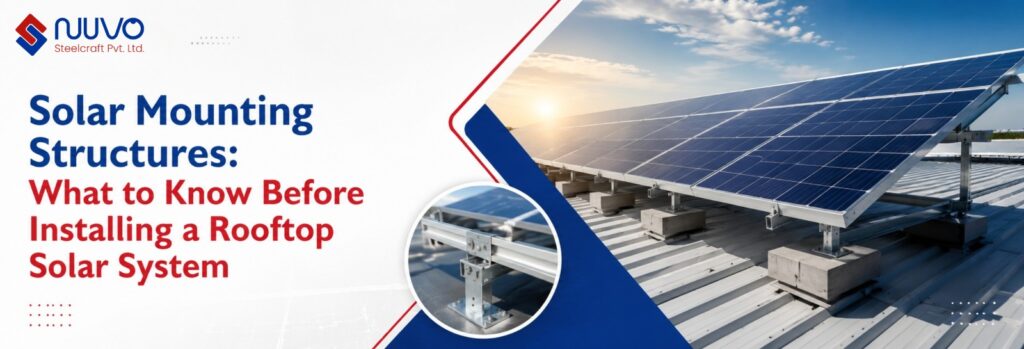
As the world moves toward cleaner and more sustainable energy solutions, solar power has emerged as one of the most effective ways to reduce electricity costs and dependence on conventional energy sources. In India, increasing electricity consumption, government incentives, rising environmental awareness and advancements in solar technology have accelerated the adoption of rooftop and utility-scale solar systems.
While solar panels often receive the most attention during the planning process, one critical component is frequently overlooked the solar mounting structure. A solar installation is only as strong and reliable as the structure that supports it. The mounting system serves as the foundation of the entire solar setup, ensuring proper panel positioning, structural stability, safety and long-term performance.
Whether you are planning a residential rooftop installation, a commercial solar project or a large-scale solar farm, understanding the importance of solar mounting structure in Maharashtra is essential. The right structure not only protects your investment but also maximises energy generation and system lifespan.
Before investing in a solar project, property owners, businesses and developers should understand how solar mounting systems work, what factors influence their performance and why selecting a reliable manufacturer is critical to project success.
Understanding Solar Mounting Structures
Solar mounting structures are engineered support systems designed to hold solar panels securely in place. These structures ensure that solar modules remain properly aligned while withstanding environmental conditions such as wind, rain, temperature fluctuations and seismic activity.
The mounting structure determines the orientation and tilt angle of solar panels, directly affecting energy production efficiency. A well-designed support system optimises sunlight exposure while maintaining structural integrity over the entire operational life of the solar installation.
Modern solar mounting structures in India are designed using advanced engineering principles to provide strength, durability, corrosion resistance and long-term reliability.
Without a robust mounting structure, even the highest-quality solar panels may fail to deliver optimal performance.
Why Mounting Structures Are Crucial for Solar Performance
Many people assume that solar panel efficiency depends solely on the panels themselves. In reality, the supporting structure plays a significant role in overall system effectiveness.
A properly designed solar structures in Maharashtra support system ensures that panels remain positioned at optimal angles to capture maximum sunlight throughout the day. It also protects panels from excessive movement, structural stress and environmental damage.
Poorly designed structures can lead to:
- Reduced energy generation
- Panel misalignment
- Water accumulation
- Increased maintenance requirements
- Premature component failure
- Structural safety risks
Investing in high-quality mounting systems contributes directly to long-term solar performance and return on investment.
The Growing Importance of Solar Energy in 2026
The global energy landscape continues to evolve rapidly and solar energy 2026 trends indicate strong growth in both residential and commercial adoption.
India has set ambitious renewable energy targets, encouraging businesses and homeowners to transition toward sustainable power generation. Technological improvements, declining equipment costs and favourable government policies are making solar energy more accessible than ever. State-level targets and subsidies are administered by MEDA, Government of Maharashtra.
As solar installations become increasingly widespread, the quality and reliability of supporting infrastructure have become equally important.
The future of rooftop solar in Maharashtra depends not only on efficient photovoltaic modules but also on durable structural systems capable of supporting installations for decades.
This makes mounting structures a critical component of every successful solar project.
Types of Solar Mounting Structures
Solar mounting systems are available in various configurations depending on installation requirements.
The most common categories include:
Rooftop Solar Mounting Structures
Rooftop systems are installed on residential, commercial and industrial buildings. These structures are specifically designed to accommodate roof conditions while ensuring stability and optimal panel orientation.
Ground-Mounted Solar Structures
Large-scale solar installations often utilize ground mounted solar MMS in Maharashtra systems. These structures are anchored directly into the ground and can support extensive solar arrays across open land.
Solar Farm Structures
Utility-scale projects rely on specialised solar farm structures capable of supporting thousands of panels across large geographical areas.
Each structure type requires customised engineering based on site conditions, environmental factors and energy production objectives.
Rooftop Solar Installation: Why Structural Assessment Matters
One of the most important steps in installing solar roofing sheets in Maharashtra is evaluating the structural capacity of the building.
Solar panels and mounting systems add weight to rooftops. Before installation begins, engineers must assess whether the structure can safely support the additional load.
Factors such as roof material, age, design, slope and overall condition influence installation feasibility.
Ignoring structural assessments can create safety concerns and reduce system reliability.
Professional evaluation ensures that the rooftop can accommodate the solar system while maintaining long-term structural integrity.
Choosing the Right Solar Panel Support System
Selecting an appropriate solar panel support system involves much more than simply purchasing a mounting frame.
Several factors should be considered:
- Roof type
- Environmental conditions
- Wind loads
- Corrosion exposure
- Panel configuration
- Maintenance accessibility
- Future expansion requirements
A properly engineered support structure ensures that panels remain stable throughout varying weather conditions while maximising operational efficiency.
The best solutions balance strength, durability, ease of installation and long-term performance.
Materials Used in Solar Mounting Structures
Material selection plays a significant role in the durability and reliability of solar support systems.
Most solar MMS in Maharashtra are manufactured using galvanised steel, aluminium or specialised coated materials designed to resist corrosion and environmental degradation. Galvanised steel remains one of the most widely used options because of its strength, affordability and excellent corrosion resistance.
Aluminium structures are lightweight and highly resistant to rust, making them suitable for specific applications.
Choosing high-quality materials helps extend system lifespan while reducing maintenance requirements.
Wind Resistance and Structural Stability
Solar installations must withstand environmental forces throughout their operational life.
Wind loads are among the most critical considerations in mounting structure design. Strong winds can generate significant uplift forces capable of damaging improperly designed systems. Design wind speeds are tabulated in the National Building Code of India.
Professional structural engineering ensures that mounting systems can resist anticipated wind speeds and environmental stresses.
Reliable solar panel support structures incorporate advanced load analysis and reinforcement strategies to maintain stability under challenging conditions.
Proper engineering minimises risk while protecting both solar equipment and surrounding property.
Importance of Tilt Angle and Orientation
The positioning of solar panels significantly affects energy production.
Mounting structures determine the tilt angle and orientation of solar modules, influencing how effectively panels capture sunlight throughout the year.
The optimal angle varies depending on geographic location, climatic conditions and project objectives.
A well-designed rooftop solar installation maximises solar exposure while minimising shading and energy losses.
Professional solar designers carefully evaluate site conditions to determine the most effective mounting configuration.
Ground-Mounted Solar Systems: When Are They Preferred?
While rooftop systems are popular, many projects benefit from ground-mounted solar installations.
Ground-mounted systems are often preferred when:
- Roof space is insufficient
- Energy requirements are large
- Land availability is adequate
- Future expansion is anticipated
- Optimal panel orientation cannot be achieved on rooftops
Ground-mounted systems offer greater flexibility in layout design and maintenance accessibility.
These installations are commonly used in industrial facilities, agricultural operations, institutions and utility-scale energy projects. Industrial land for such plants is allotted through MIDC.
Understanding Solar Farm Structures
Large-scale renewable energy projects depend heavily on reliable solar farm structures.
Solar farms involve thousands of interconnected panels spread across extensive land areas. Structural systems must support these arrays while ensuring durability, efficiency and ease of maintenance.
Because solar farms operate for decades, structural reliability is essential.
Engineers must consider factors such as:
- Soil conditions
- Wind loads
- Corrosion exposure
- Thermal expansion
- Maintenance requirements
- Long-term operational performance
High-quality structural design contributes significantly to project profitability and energy output.
Maintenance Considerations for Solar Structures
One of the advantages of modern solar systems is relatively low maintenance requirements.
However, regular inspections remain important for ensuring structural integrity and operational efficiency.
Maintenance activities may include:
- Fastener inspection
- Corrosion assessment
- Structural alignment checks
- Cleaning access evaluation
- Damage detection
Well-designed mounting structures simplify maintenance activities while minimising operational disruptions.
Investing in quality components from the beginning often reduces maintenance costs over the system’s lifetime.
Why Manufacturing Quality Matters
The performance of a solar mounting structure depends heavily on manufacturing quality.
Precision fabrication ensures accurate dimensions, proper fitment and consistent structural performance. High-quality manufacturing processes also improve corrosion resistance and long-term durability.
Choosing an experienced supplier of industrial solar structures in Maharashtra helps ensure that structures meet industry standards and project-specific requirements.
Manufacturers with strong engineering capabilities can provide customised solutions that optimise performance and installation efficiency.
Quality manufacturing directly influences reliability, safety and lifecycle value.
Future Trends in Solar Mounting Structures
As renewable energy adoption continues expanding, mounting structural technologies are evolving rapidly.
Emerging trends include:
- Lightweight structural systems
- Improved corrosion-resistant coatings
- Tracking systems for enhanced energy generation
- Modular installation solutions
- Smart monitoring integration
- Sustainable material innovations
These developments are expected to play a major role in shaping solar energy 2026 and beyond.
The future of solar infrastructure will increasingly depend on efficient, durable and technologically advanced support systems.
How Nuvo Steelcraft Supports the Solar Industry
As demand for renewable energy infrastructure continues growing, Nuvo Steelcraft remains committed to delivering high-quality structural solutions that support modern solar projects. The company understands that successful solar installations require more than efficient photovoltaic technology they require reliable structural foundations designed for long-term performance.
With expertise in manufacturing advanced solar mounting structures in India, Nuvo Steelcraft provides engineered solutions for residential, commercial, industrial and utility-scale applications. As a trusted solar structure manufacturer in Maharashtra, the company focuses on precision engineering, durable materials and customised structural systems that meet diverse project requirements.
Whether supporting rooftop solar installation projects, ground-mounted solar developments or large-scale solar farm structures, Nuvo Steelcraft combines engineering excellence with manufacturing expertise to help clients achieve reliable and efficient renewable energy solutions.
Through continuous innovation and quality-focused production practices, Nuvo Steelcraft contributes to the growth of sustainable energy infrastructure across India.
Conclusion
Installing a solar power system is a long-term investment that requires careful planning and informed decision-making. While solar panels often attract the most attention, the importance of robust and reliable mounting structures should never be underestimated.
From ensuring proper panel positioning and maximising energy generation to providing structural stability and long-term durability, solar mounting structures in India form the backbone of every successful solar installation.
Whether you’re considering solar structures for MW scale in Maharashtra, exploring ground-mounted solar options or developing large-scale solar farm structures, selecting the right solar panel support system is essential for achieving optimal performance and return on investment.
As renewable energy adoption continues accelerating and solar energy in 2025 drives industry growth, businesses and homeowners must prioritise quality, engineering expertise and structural reliability.
With experienced partners like Nuvo Steelcraft, solar projects can benefit from durable, efficient and future-ready structural solutions that support long-term sustainability and energy independence.