
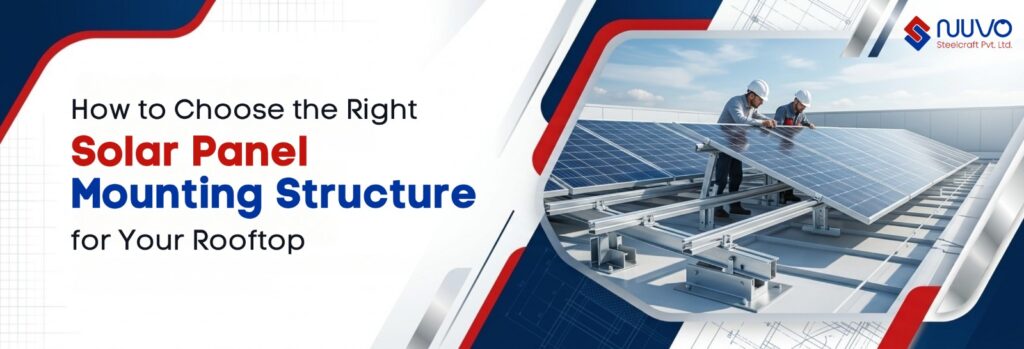
The success of any rooftop solar project depends on more than just choosing high-efficiency solar panels. A well-designed solar mounting structure in Maharashtra forms the foundation of a safe, durable and high-performing solar system. It supports the panels throughout their service life while protecting them from environmental stress such as heavy rainfall, strong winds, heat and long-term corrosion.
Whether you are planning a solar installation for a commercial building, industrial facility, warehouse or institutional property, choosing the right mounting structure directly affects energy generation, maintenance requirements and overall return on investment. A poor-quality structure may lead to reduced panel efficiency, increased maintenance costs and even structural risks over time.
This guide explains the key factors to consider before selecting a rooftop solar mounting system. It also covers different structure options, material selection, wind resistance, installation considerations and practical tips to help you make an informed decision.
Why the Right Solar Panel Mounting Structure Matters
A rooftop solar system is expected to perform efficiently for 25 years or more. During this period, the mounting structure must withstand changing weather conditions, continuous panel weight, thermal expansion and environmental exposure.
A properly engineered mounting structure offers several benefits.
- Maintains the correct tilt angle for maximum solar energy generation
- Protects solar panels from movement and vibration
- Reduces maintenance requirements
- Extends the lifespan of the complete solar system
- Improves installation safety
- Supports long-term structural stability
Choosing the lowest-cost mounting system may appear economical initially but poor structural quality often leads to higher repair and replacement costs in the future.
For commercial and industrial projects, companies such as Nuvo Steelcraft focus on engineered solutions that balance strength, durability and installation efficiency for long-term performance.
Rooftop Mounting Structure Types
Every rooftop has different design requirements. The best solution depends on the roof type, available space, load-bearing capacity and project objectives.
Fixed Tilt Mounting Structure
Fixed tilt systems are the most common rooftop solution.
The solar panels remain at a predetermined angle that is optimized according to the geographical location.
Advantages include:
- Simple design
- Lower installation cost
- Minimal maintenance
- High structural reliability
- Suitable for most commercial rooftops
This option is widely used for factories, offices, educational institutions, hospitals and warehouses.
Ballasted Mounting Structure
Ballasted systems are mainly installed on flat roofs where roof penetration should be minimized.
Instead of drilling into the roof, the structure is secured using concrete blocks or other ballast materials.
Advantages include:
- Minimal roof damage
- Faster installation
- Suitable for waterproof roofs
- Easy removal if required
However, the building must be capable of supporting the additional ballast weight.
Elevated Mounting Structure
Elevated structures raise the solar panels above the roof surface.
These systems are ideal when rooftop space must remain accessible for maintenance, ventilation, parking or equipment placement. Elevated frames pair well with solar roofing sheets in Maharashtra.
Benefits include:
- Better airflow beneath panels
- Reduced heat buildup
- Easier maintenance access
- Flexible roof utilization
They are commonly installed on industrial buildings where operational access remains important.
East-West Mounting Structure
East-West systems position solar panels in opposite directions rather than facing only south.
This arrangement provides:
- Higher rooftop space utilization
- Better energy generation throughout the day
- Lower wind resistance
- Reduced shading between panel rows
Large commercial rooftops frequently use this design to maximize available roof area.
Choosing the Right Structure Material
The quality of the pre engineered buildings in Maharashtra significantly influences the durability, safety and lifespan of the mounting system.
Several materials are commonly used across the solar industry.
Galvanized Steel
Galvanized steel is one of the most preferred choices for commercial rooftop projects. The same grade is used across industrial solar structures in Maharashtra.
Advantages include:
- High structural strength
- Excellent load-bearing capacity
- Long service life
- Superior corrosion resistance
- Cost-effective for large installations
Hot-dip galvanised steel performs especially well in demanding industrial environments. Coating grades follow standards notified by the Ministry of Steel.
Aluminium
Aluminium mounting systems are lightweight and naturally corrosion-resistant.
Benefits include:
- Easy handling
- Faster installation
- Lower dead load on rooftops
- Excellent weather resistance
They are often selected for buildings where weight reduction is a major consideration.
Stainless Steel Components
Although complete structures are rarely manufactured entirely from stainless steel, critical fasteners, bolts and connectors are commonly made using stainless steel.
Advantages include:
- Excellent corrosion resistance
- Long service life
- Improved fastening reliability
- Reduced maintenance
Combining galvanized steel with stainless steel fasteners often provides the ideal balance between cost, durability and performance.
Material Selection Factors
Before selecting the material, consider:
- Roof load capacity
- Local weather conditions
- Coastal or industrial environment
- Corrosion exposure
- Project budget
- Expected system lifespan
- Maintenance accessibility
Experienced manufacturers like Nuvo Steelcraft evaluate these engineering factors before recommending suitable mounting solutions.
Understanding Wind Load Design
One of the most overlooked aspects of rooftop solar installation is solar structures in Maharashtra wind load design.
Solar panels act like large flat surfaces that can experience significant uplift during high wind conditions. Without proper engineering, excessive wind pressure can loosen fasteners, deform structural members or even damage the complete installation.
Professional wind load calculations consider:
- Building height
- Roof geometry
- Panel tilt angle
- Local wind speed
- Terrain category
- Panel spacing
- Structural connections
Every project should comply with relevant engineering standards and local building regulations. Supporting members such as C purlins in Maharashtra must be sized to the same code.
Why Wind Engineering Is Critical
Proper wind design offers several long-term advantages.
Improved Safety
Correct structural calculations minimize the risk of panel movement during storms. The governing provisions sit in the National Building Code of India.
Longer Structural Life
Balanced load distribution reduces fatigue and material stress.
Better System Reliability
Secure mounting prevents alignment changes that may reduce energy generation.
Insurance Compliance
Many commercial insurance providers require documented structural engineering before approving rooftop solar installations. Rooftop scheme rules for the state are published by MEDA, Government of Maharashtra.
Ignoring wind calculations can lead to expensive repairs and safety concerns that far exceed the initial savings.
Roof Assessment Before Installation
No two rooftops are identical.
Before selecting a mounting system, engineers perform a comprehensive site assessment.
Important evaluation points include:
- Roof type
- Building age
- Structural capacity
- Drainage pattern
- Waterproofing condition
- Existing rooftop equipment
- Future maintenance access
- Solar orientation
A proper site inspection helps identify potential challenges before installation begins.
MMS Installation Best Practices
Professional solar MMS in Maharashtra installation plays an equally important role as structural design.
Even the strongest mounting system may underperform if installation quality is compromised.
Best practices include:
Accurate Layout Planning
Panel rows should be aligned carefully to avoid shading and maximize energy production.
Proper Fastener Tightening
All bolts, clamps and anchors should be tightened according to specified torque values.
Loose connections can gradually weaken under repeated wind vibration.
Corrosion Protection
Protective coatings should remain intact during installation.
Damaged galvanized surfaces should be repaired immediately to prevent corrosion.
Waterproof Roof Penetrations
Where roof penetrations are necessary, appropriate sealing methods must be used to prevent leakage.
Final Structural Inspection
Every completed project should undergo inspection to verify:
- Structural alignment
- Bolt tightening
- Panel spacing
- Roof sealing
- Safety compliance
Companies such as Nuvo Steelcraft emphasize precision manufacturing that supports efficient installation while maintaining long-term structural integrity.
Common Mistakes to Avoid
Many rooftop solar projects experience avoidable issues because structural considerations receive less attention than solar panels.
Some common mistakes include:
Choosing Based Only on Price
Low-cost structures often compromise coating quality, steel thickness or engineering standards.
Ignoring Roof Load Capacity
Additional structural weight must always be evaluated before installation begins.
Overlooking Future Maintenance
Adequate access should remain available for cleaning, inspection and repairs.
Poor Drainage Planning
Improper mounting layouts can block water flow, leading to long-term roof damage.
Using Low-Quality Fasteners
Corroded connectors weaken the entire mounting system even when the primary structure remains strong.
Skipping Professional Engineering
Every commercial rooftop should undergo structural analysis before installation.
Questions to Ask Before Selecting a Supplier
Before purchasing a mounting system, consider asking:
- Does the structure comply with recognized engineering standards?
- What corrosion protection process is used?
- Is the design customized for the project?
- Has a wind load analysis been performed?
- What warranty is offered?
- Can the supplier support large commercial installations?
- Are installation guidelines provided?
- Is technical support available after project completion?
These questions help identify suppliers focused on long-term quality rather than short-term pricing.
Why Engineering Quality Creates Better Long-Term Value
Solar systems are expected to operate for decades. Investing in a well-designed mounting structure protects every other component installed above it.
High-quality structures deliver:
- Better energy production consistency
- Lower maintenance costs
- Improved worker safety
- Longer equipment lifespan
- Greater return on investment
- Better performance during extreme weather
This makes engineering quality one of the most valuable investments in any rooftop solar project.
Conclusion
Selecting the right solar panel mounting structure requires careful evaluation of rooftop conditions, material quality, structural engineering installation practices and long-term durability. The mounting system is not simply a support frame. It is a critical component that influences the safety, efficiency and lifespan of the entire solar power system.
Understanding different rooftop solar in Maharashtra structure types, selecting the appropriate structure material, ensuring proper wind load design and following professional MMS installation practices help create a reliable solar solution that performs consistently for decades.
For commercial and industrial solar projects, partnering with an experienced engineering manufacturer is equally important. Nuvo Steelcraft delivers precision-engineered solar mounting solutions designed for strength, durability and dependable long-term performance. By combining quality manufacturing with engineering expertise, Nuvo Steelcraft helps businesses build rooftop solar systems that remain secure, efficient and ready for the future.